
“Camilo and Dario were amazing!”










How our financing option works
We’re now offering fast and simple financing to customers on purchases between $500 and $25,000* through Wisetack.
With Wisetack, you can select the option that best fits your budget and pay in easy monthly installments rather than all at once upfront.

Fast and easy
The application takes about a minute to complete.

No hidden fees
There are no penalties, fees, or compounding interest.

Options for you
You choose the monthly payment amount that works best for you.
Contact us to learn more about our financing offer!
*All financing is subject to credit approval. Your terms may vary. Payment options through Wisetack are provided by our lending partners. For example, a $1,200 purchase could cost $104.89 a month for 12 months, based on an 8.9% APR, or $400 a month for 3 months, based on a 0% APR. Offers range from 0–35.9% APR based on creditworthiness. State interest rate caps may apply. No other financing charges or participation fees. See additional terms at https://www.wisetack.com/faqs..
.


















This blog compares Northern Virginia cities by cost, lifestyle fit, and practical relocation considerations so you can choose the right city for your budget

The salary needed to live in Northern Virginia varies dramatically based on household composition, location within the region, and lifestyle expectations. Single adults need approximately $65,650 annually before taxes to afford basic necessities in Fairfax County. Families with children require substantially more, with two working adults and three children needing roughly $182,483 annually just to cover essentials without discretionary spending or savings. Northern Virginia ranks among the nation's most expensive metropolitan areas due to proximity to Washington D.C., limited housing supply, and strong employment markets attracting high-earning professionals. Understanding required income levels helps prospective residents evaluate job opportunities and assists current residents in assessing their financial positions. Minimum Income Requirements by Household Type The MIT Living Wage Calculator provides detailed income requirements for different household compositions in Northern Virginia counties. These figures represent minimum income needed to afford basic necessities including housing, food, transportation, healthcare, childcare, and taxes without government assistance or private support. Single Adult Households A single adult with no children needs approximately $65,650 annually before taxes to cover basic living expenses in Fairfax County. This translates to roughly $31.56 per hour assuming full-time employment of 40 hours weekly year-round. After federal, state, and local taxes, take-home pay from this income level sits around $48,000 to $50,000 annually, or $4,000 to $4,167 monthly. This net income must cover housing typically costing $1,800 to $2,400 monthly, leaving limited funds for food, transportation, healthcare, and other necessities. Many entry-level professional positions in Northern Virginia pay $45,000 to $55,000 annually, falling short of the calculated living wage. This gap explains why young professionals frequently rely on roommates, family support, or extended commutes from more affordable areas. The average salary in Northern Virginia per month for single adults meeting minimum requirements equals approximately $5,471 gross or $4,000 to $4,167 net after taxes. This monthly income provides zero buffer for emergencies, discretionary spending, or savings toward future goals. Two-Adult Households with Children Family households face substantially higher costs primarily due to childcare expenses and larger housing needs. Two working adults with one child require approximately $92,875 annually before taxes. This household income translates to roughly $7,740 monthly gross or $6,000 to $6,500 monthly net after taxes. Childcare for one infant or toddler costs $1,800 to $2,500 monthly at licensed facilities. Combined with housing needs of $2,200 to $2,800 for two-bedroom apartments, these two categories alone consume $4,000 to $5,300 monthly, leaving limited funds for food, transportation, healthcare, and other necessities. Two working adults with two children need approximately $120,000 to $125,000 annually before taxes. Monthly gross income reaches $10,000 to $10,417, with net income around $7,500 to $8,000 after taxes. Two working adults with three children require approximately $182,483 annually before taxes. This substantial requirement translates to $15,207 monthly gross or roughly $11,500 to $12,500 monthly net. Childcare costs for three children can exceed $4,500 to $6,000 monthly when all require full-time care. These figures demonstrate why dual-income professional households dominate Northern Virginia demographics. Service industry workers, teachers, or other moderate-income professionals struggle to afford family life in the region without significant financial assistance or extended family support. For context on how these income requirements translate to housing costs, review Northern Virginia average rent to understand typical monthly housing expenses. Single-Parent Households Single parents face particularly challenging financial mathematics. One working adult with one child needs approximately $85,000 to $90,000 annually to afford basic necessities including childcare. One working adult with two children requires roughly $100,000 to $110,000 annually. These income levels prove difficult for single parents to achieve, explaining why single-parent households show the highest rates of financial stress in the region. Many single parents work multiple jobs, rely on family support for childcare, or accept government assistance to bridge the gap between their actual income and required living costs. The region's high expenses create enormous challenges for households lacking two professional incomes. Income for Comfortable Living The living wage calculations represent minimum survival income without discretionary spending, savings, or financial cushion for emergencies. Truly comfortable living requires substantially higher income. The 50/30/20 Budget Rule Financial planners often recommend the 50/30/20 budget rule allocating 50 percent of income to needs, 30 percent to wants, and 20 percent to savings and debt repayment. Applying this framework to Northern Virginia reveals much higher required income levels. If a single adult needs $65,650 annually for basic needs representing only 50 percent of income, comfortable living requires approximately $131,300 annually. However, a 2025 study found Virginia residents need roughly $106,704 annually statewide to live comfortably. Northern Virginia's higher costs suggest the comfortable income threshold exceeds $120,000 to $130,000 for single adults. Two-adult households with children need proportionally higher comfortable living incomes. If $92,875 covers only basic needs for one-child families, comfortable living requires approximately $185,750 annually. Families with multiple children need $250,000 to $300,000 annually to truly live comfortably with discretionary spending and meaningful savings. These elevated comfort thresholds explain Northern Virginia's concentration of high-earning government contractors, technology professionals, lawyers, doctors, and business executives. The region's economy attracts and rewards high-skill professional workers while creating significant challenges for moderate-income households. What Comfortable Living Includes Comfortable living budgets enable discretionary spending on dining out, entertainment, hobbies, travel, and recreation that living wage calculations exclude. Families can afford children's extracurricular activities, music lessons, sports leagues, and summer camps without constant financial stress. Comfortable incomes support retirement savings and emergency funds providing financial security. Households can weather job losses, medical emergencies, or major unexpected expenses without immediate crisis. Comfortable living enables periodic home improvements, vehicle replacements, and technology upgrades as needed rather than delaying all non-essential purchases indefinitely. Quality of life improves substantially when households aren't constantly choosing between competing necessities. Learn more about areas attracting comfortable-income professionals at young professional areas in Northern Virginia to understand lifestyle patterns in these communities. Average Salary in Northern Virginia The average salary in Northern Virginia varies significantly by occupation, education level, and specific location within the region. Different sources provide varying estimates based on methodology and data collection approaches. General Salary Averages According to employment data, workers in Northern Virginia earn substantially more than state and national averages. Entry-level professional positions typically start at $50,000 to $65,000 annually. Mid-career professionals earn $80,000 to $120,000. Senior professionals and executives often exceed $150,000 to $250,000 or more. Regional salary data from ZipRecruiter shows Northern Virginia salaries varying by city and occupation, with Arlington leading at higher average compensation levels. Salaries by Northern Virginia City Average salaries vary considerably across Northern Virginia jurisdictions. Location significantly impacts both earning potential and required income due to differing living costs. Arlington - Average annual salary approximately $34,874 Highest average compensation in the region Concentration of federal agencies and contractors Technology companies and consulting firms Monthly average approximately $2,906 Alexandria - Average annual salary approximately $32,367 Strong professional services sector Government contractors and associations Historic Old Town and waterfront development Monthly average approximately $2,697 Springfield - Average annual salary approximately $31,663 Suburban location with diverse employment Mix of government and private sector More affordable than urban cores Monthly average approximately $2,638 Ashburn - Average annual salary approximately $30,998 Technology sector concentration Data center corridor employment Newer suburban development Monthly average approximately $2,583 Fairfax - Average annual salary approximately $30,985 County seat with government employment Diverse economic base Educational institutions Monthly average approximately $2,582 McLean - Average annual salary approximately $30,642 Affluent residential community High concentration of wealth Professional services dominate Monthly average approximately $2,553 Manassas - Average annual salary approximately $30,306 More affordable outer suburb Manufacturing and logistics Government contractors Monthly average approximately $2,525 Norfolk - Average annual salary approximately $30,259 Military and defense contractors Port-related employment Healthcare and education Monthly average approximately $2,521 Charlottesville - Average annual salary approximately $30,072 University of Virginia employment Healthcare and education focus Tourism and hospitality Monthly average approximately $2,506 Centreville - Average annual salary approximately $30,045 Suburban residential community Mix of industries Commuter workforce Monthly average approximately $2,503 These average salaries fall significantly below the income required for comfortable living, explaining why many households rely on dual incomes or face financial constraints despite working full-time. High-Paying Industries and Occupations Certain industries and occupations in Northern Virginia command premium compensation enabling comfortable living standards. Technology Sector Software engineers and developers earn $100,000 to $180,000 annually. Senior engineers and architects exceed $150,000 to $250,000. Technology product managers earn similar ranges. Data scientists and analysts command $90,000 to $150,000. Cloud computing specialists and cybersecurity professionals earn $110,000 to $180,000 given high demand and limited qualified candidates. Government Contractors Defense contractors pay systems engineers $90,000 to $150,000. Program managers earn $100,000 to $180,000. Senior consultants and subject matter experts command $120,000 to $200,000 or more. Intelligence community contractors offer premium compensation. Cleared professionals with specialized skills earn substantial premiums above uncleared equivalents. Healthcare Professions Physicians in Northern Virginia earn $200,000 to $500,000 depending on specialty. Surgeons and specialists typically exceed $300,000 annually. Registered nurses earn $70,000 to $95,000 depending on experience and specialty. Nurse practitioners and physician assistants earn $100,000 to $130,000. Legal Professions Attorneys at major law firms start at $180,000 to $215,000 for first-year associates. Partner-track attorneys earn $250,000 to $500,000 or more. Partners at successful firms often exceed $500,000 to several million annually. Government attorneys earn less but still receive comfortable compensation. Federal government lawyers earn $80,000 to $160,000 depending on experience and grade level. Financial Services Financial advisors, wealth managers, and investment professionals earn $100,000 to $300,000 including base salary and performance bonuses. Senior professionals and those managing high-net-worth clients earn substantially more. Location Impact on Required Salary Required income varies significantly across Northern Virginia jurisdictions due to differing housing costs and living expenses. High-Cost Jurisdictions Arlington County and Falls Church City represent the region's most expensive areas. Single adults need $70,000 to $75,000 annually for basic living. Families with children require $100,000 to $200,000 depending on family size. Premium pricing reflects Metro access, walkable neighborhoods, urban amenities, and proximity to D.C. employment centers. Residents accept higher costs for convenience and lifestyle benefits. Moderate-Cost Jurisdictions Fairfax County and Alexandria City show moderate costs within the Northern Virginia context. Single adults need approximately $65,000 to $70,000 annually. Families require $90,000 to $180,000 depending on size. These areas balance accessibility with somewhat more affordable housing compared to Arlington and Falls Church. Diverse communities offer options across different price points. Lower-Cost Jurisdictions Prince William County, Stafford County, and outer Loudoun County offer relative affordability. Single adults can manage on $55,000 to $60,000 annually. Families need $80,000 to $150,000 depending on size. Lower costs come with trade-offs including longer commutes, fewer urban amenities, and sometimes lower-performing schools. Many families accept these compromises to achieve homeownership or larger living spaces. Explore affordable neighborhoods in Northern Virginia for guidance on lower-cost options. For families prioritizing school quality alongside affordability, review best family neighborhoods in Northern Virginia to identify communities balancing these priorities. Evaluating Job Offers Understanding required income helps evaluate whether job opportunities provide adequate compensation for Northern Virginia living costs. Salary Negotiation Research typical compensation for your position and experience level before accepting offers. Websites like Glassdoor, Salary.com, and Payscale provide salary ranges by position and location. Don't hesitate to negotiate initial offers. Employers expect negotiation and often have flexibility above initial offers. A $5,000 to $10,000 salary increase saves years of small annual raises to reach the same income level. Consider total compensation beyond base salary. Health insurance quality, retirement contributions, paid time off, flexible work arrangements, and other benefits significantly impact financial wellness. Remote Work Considerations Remote work opportunities allow people to earn Northern Virginia salaries while living in lower-cost areas. However, many employers adjust compensation based on employee location. Some companies maintain consistent salaries regardless of location. Others reduce compensation 10 to 30 percent for employees relocating to lower-cost areas. Understand employer policies before accepting remote positions or relocating. Remote work eliminates commuting costs saving $200 to $500 monthly between fuel, tolls, parking, and vehicle wear. These savings improve financial positions even with unchanged salaries. Career Progression Evaluate long-term earning potential when considering positions. Entry-level roles paying $55,000 might offer limited room for advancement. Positions starting at $65,000 with clear paths to $90,000 to $120,000 provide better long-term prospects. Northern Virginia's strong job market enables career progression through job changes every few years. Strategic moves often generate 10 to 20 percent salary increases exceeding typical annual raises of 2 to 4 percent. Professional development investments increase earning potential. Certifications, advanced degrees, and specialized training often generate returns through higher compensation. Household Income Strategies Many Northern Virginia households employ various strategies to achieve required income levels. Dual-Income Households Most comfortable-living households rely on two professional incomes. Combined earnings of $150,000 to $250,000 enable family life including homeownership, quality childcare, savings, and discretionary spending. Dual-income households must carefully coordinate work schedules, childcare responsibilities, and household management. Both partners working full-time professional jobs requires significant organization and often outside support. Side Income Sources Many residents supplement primary employment with freelance work, consulting, or side businesses. Extra income of $500 to $2,000 monthly significantly improves financial positions and provides buffers for unexpected expenses. Rental income from basement apartments or accessory dwelling units generates passive income offsetting housing costs. However, becoming a landlord involves responsibilities and risks beyond simple financial calculations. Geographic Arbitrage Some workers maintain Northern Virginia employment while living in lower-cost areas requiring long commutes. This strategy trades time for money but enables homeownership otherwise impossible. Others alternate between peak earning years in Northern Virginia and lower-cost living during career transitions or retirement. This geographic arbitrage maximizes lifetime earnings while controlling living costs. For comprehensive information about different Northern Virginia communities, consult this Northern Virginia city guide covering various areas and their characteristics. The salary needed to live in Northern Virginia substantially exceeds national averages due to high housing costs, expensive childcare, and generally elevated prices for goods and services. Single adults need minimum $65,650 annually for basic necessities, while families with children require $90,000 to $180,000 or more. Comfortable living demands even higher incomes approaching $130,000 for individuals and $200,000 to $300,000 for families. The region's strong job market attracts high-earning professionals in government contracting, technology, healthcare, legal services, and financial sectors. Understanding these income requirements helps prospective residents evaluate opportunities and current residents assess their financial positions relative to regional standards.
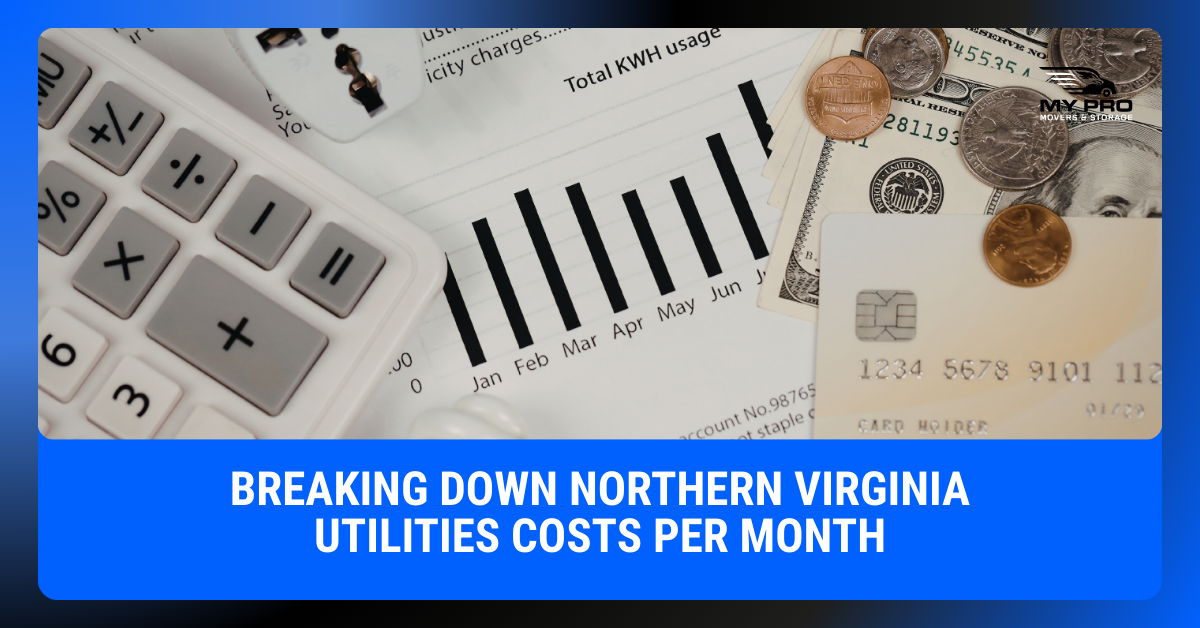
Learn about Northern Virginia utilities costs per month. Budget for electricity, gas, water, internet, and other essential services. - Updated on

Complete Northern Virginia city guide covering real estate, neighborhoods, cost of living, jobs, and schools. Essential insights for moving to NoVA in 2025.

Northern Virginia Average Rent: Breaking Down Monthly Costs